Custom Printed Workwear: A Practical Guide to DTF Printing
Custom printed workwear with DTF designs for businesses, schools and events. Explore garments, print methods and ordering tips in our PIXART guide.
- Custom Workwear
- DTF Printing
- Custom T-Shirts
- Branded Clothing
Whether you run a building company, organise school activities or want matching clothing for your team, custom printed workwear can make a real difference to how people recognise your group. Modern DTF printing makes it possible to apply detailed, full-colour designs to a wide range of suitable garments. This guide explains how to choose the right clothing, understand the printing options and prepare an order that works for everyday use.
Why custom printed workwear is worth considering
Branded clothing does more than display a company logo. It helps customers identify staff, gives teams a consistent appearance and can make an organisation look more established. For small businesses in particular, a coordinated uniform can be a straightforward way to create a professional impression.
Think about a building contractor visiting a customer’s home. A clean polo shirt or sweatshirt featuring the company name helps establish who the person represents. The same principle applies to delivery teams, tradespeople, retail staff and event organisers.
Branded work clothing is also useful beyond the workplace. Schools may order matching shirts for trips, sports days or leavers’ celebrations, while families and community groups often choose personalised clothing for special occasions.
Who benefits from personalised clothing?
- Construction and trade businesses - branded T-shirts, sweatshirts and everyday team clothing.
- Independent businesses - staff uniforms for shops, service providers and customer-facing teams.
- Schools and colleges - class shirts, sports-event clothing and garments for educational trips.
- Clubs and charities - matching clothing for volunteers, fundraising and community activities.
- Private customers - personalised gifts, family celebrations and one-off creative designs.
The best choice depends on how frequently the clothing will be worn. A shirt for a single event has different requirements from garments used throughout a demanding working week.
Custom printed workwear and DTF printing explained
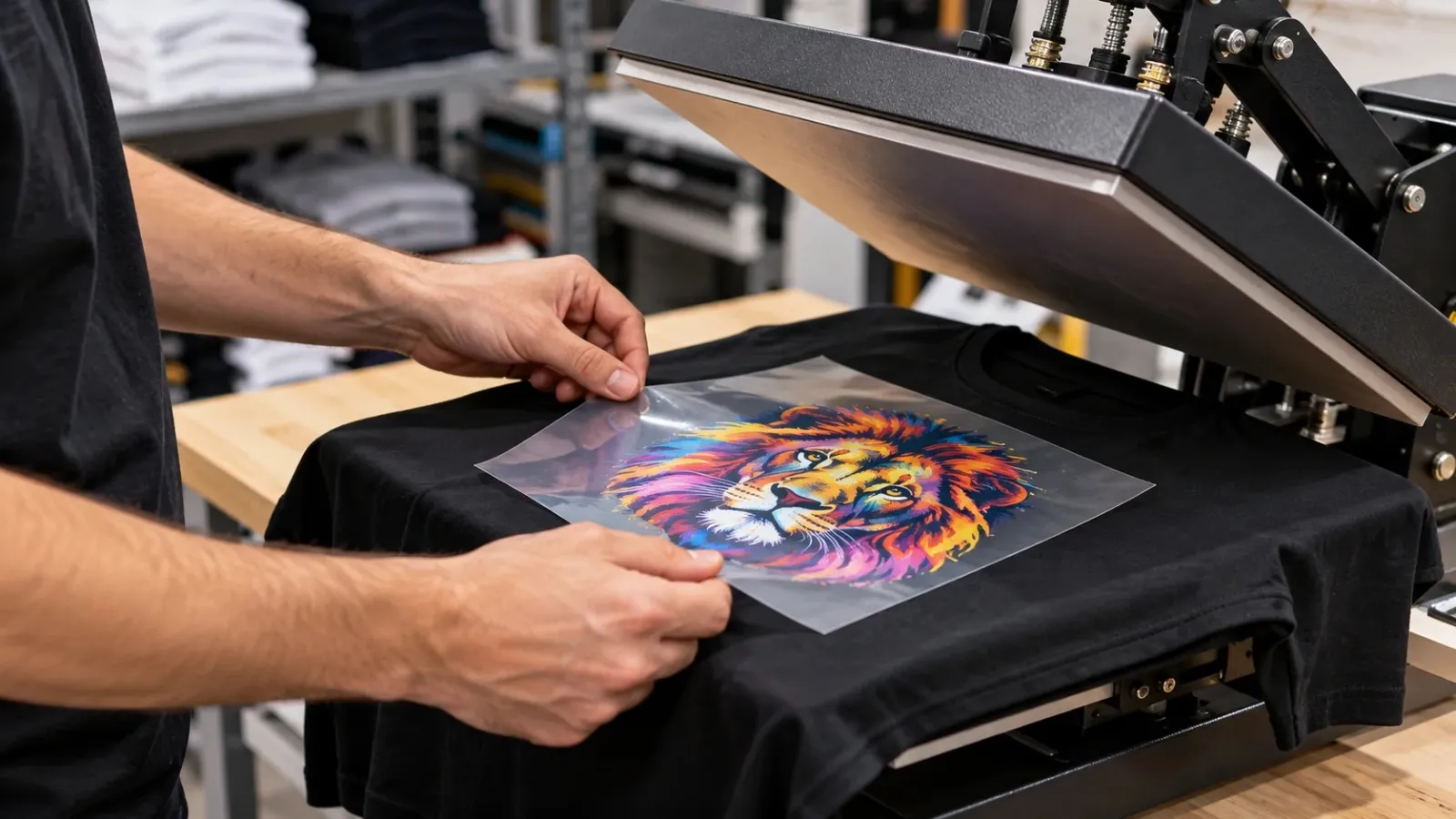
DTF stands for Direct to Film. Rather than printing directly onto the garment, the design is first printed onto a special film. An adhesive is applied, and the design is transferred to the fabric using controlled heat and pressure.
This process can reproduce colourful illustrations, small design elements and detailed logos. It is particularly useful when a business wants more than a simple one-colour print or needs different names and designs across a set of garments.
DTF garment printing works with many suitable cotton, polyester and blended fabrics. However, compatibility should never be assumed. The garment’s finish, elasticity, heat tolerance and intended use can all affect the result.
AI-generated image.
What are the main advantages of DTF?
- Detailed, multi-colour artwork can be reproduced without separate printing screens for each colour.
- Small personalised runs are possible, making DTF useful for individual garments and team orders.
- Designs can be applied to different garment colours when the appropriate transfer process is used.
- The technique can handle illustrations, lettering and many types of logos.
- Consistent results are achievable when the artwork and production settings are correctly prepared.
There are limitations to consider. Large solid areas of print may feel less breathable than the surrounding fabric. Some specialist or highly stretchable garments may also require another method or additional testing.
Tip: Ask for advice before finalising artwork containing extremely fine lines or small lettering. A design that looks sharp on a computer screen may need adjustment to remain readable on fabric.
Choosing garments for work, school and everyday wear
A good print cannot compensate for an uncomfortable or unsuitable garment. Fabric composition, weight, sizing and fit should be considered alongside colour and design. Think about whether the clothing will be worn indoors, outdoors or during physically demanding activities.
T-shirts, hoodies and polo shirts
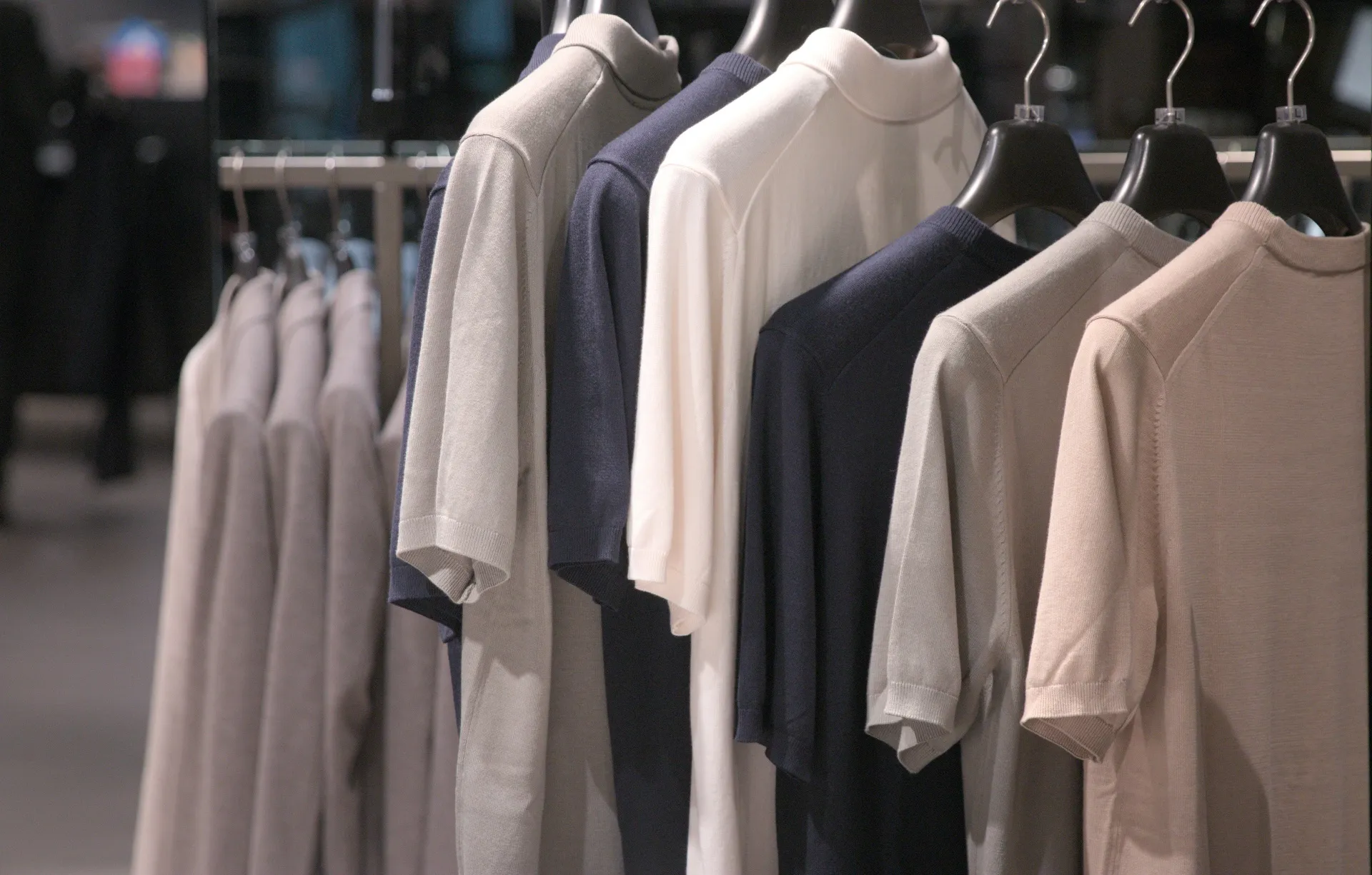
Custom printed T-shirts are often the most versatile option. They are suitable for promotional events, casual staff uniforms, school groups and personal gifts. Cotton can provide a comfortable everyday feel, while polyester and blended fabrics may suit different performance requirements.
Hoodies and sweatshirts are popular with teams working in cooler environments. They also make practical school leavers’ clothing and casual branded merchandise. Consider whether a hood, front pocket or zip could interfere with the proposed print position.
Polo shirts provide a slightly smarter look without the formality of a shirt and tie. They are useful for customer-facing staff, sales teams and businesses wanting a coordinated appearance.
| Garment | Suitable uses | Key considerations |
|---|---|---|
| T-shirt | Events, trades, school groups | Fabric, weight, fit |
| Sweatshirt | Team clothing, cooler workplaces | Thickness, comfort, print position |
| Polo shirt | Retail, services, reception teams | Collar, cut, fabric |
| Tote bag | Promotional gifts, events | Fabric texture, print area |
| Sports top | School sports, team activities | Stretch, breathability, transfer compatibility |
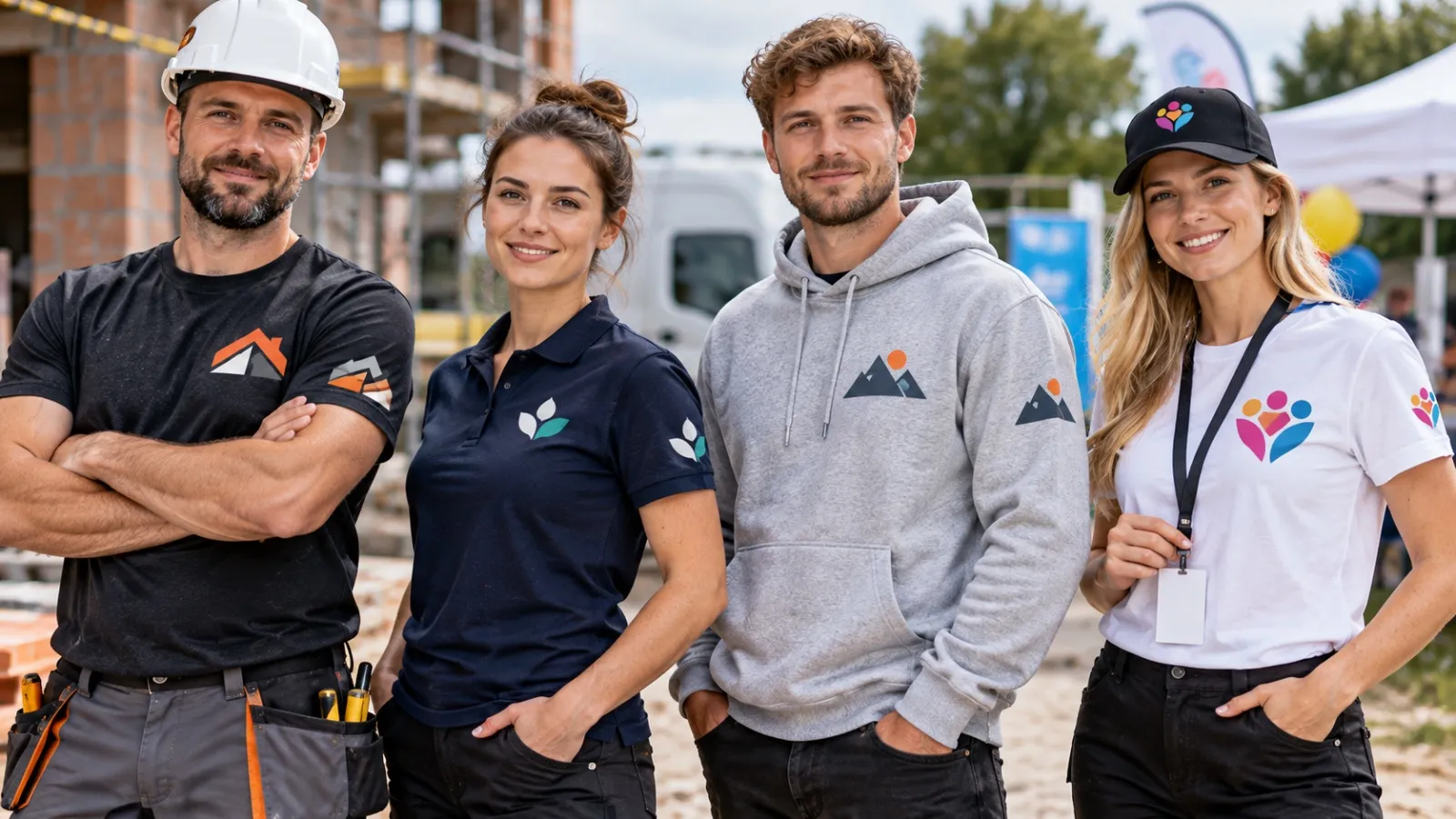
AI-generated image.
Workwear for builders and tradespeople
Construction businesses need clothing that remains comfortable during movement and regular use. A visible company logo can help identify workers on site or during customer visits, but the garment still needs to be practical for the job.
It is essential to distinguish ordinary branded clothing from protective workwear. A printed logo does not provide safety certification. High-visibility clothing, flame-resistant garments and other personal protective equipment must retain their required protective properties. Any decoration should comply with the garment manufacturer’s instructions and applicable requirements.
For outdoor teams, it may be sensible to use different clothing for warmer and colder conditions while keeping the same logo and visual identity. This gives the team a consistent appearance without forcing everyone into a single garment style.
DTF, screen printing or embroidery: which is best?
There is no single printing method that suits every order. The ideal choice depends on the artwork, garment material, quantity and desired appearance. Comparing techniques before production can prevent unnecessary compromises.
| Method | Main strength | Common uses | Points to consider |
|---|---|---|---|
| DTF printing | Detailed full-colour designs | T-shirts, hoodies, personalised runs | Large prints can feel more noticeable |
| Screen printing | Efficient for repeat designs in larger quantities | Promotional clothing, bulk orders | Separate setup requirements for colours |
| Embroidery | Textured, professional finish | Polo shirts, caps, sweatshirts | Not ideal for photographic detail |
| Heat-transfer vinyl | Clean, simple shapes and lettering | Names, numbers, basic graphics | Less convenient for intricate artwork |
DTF printing is often a strong option when the design includes gradients, several colours or fine details. Screen printing can be attractive for larger repeat orders featuring simpler artwork. Embroidery may be preferable for a classic, premium-looking logo on a polo shirt.
Durability is not determined by the technique alone. Print quality, correct application, garment construction and laundering all influence how well a finished product performs.
If your logo needs preparing or adapting, PIXART’s graphic design services can help turn an idea into artwork suitable for garment decoration.
How to order custom printed workwear
Planning the details before placing an order helps avoid common problems such as unsuitable garment sizes, poor print placement or artwork that is difficult to reproduce. You do not need professional design knowledge to get started. A clear description of what you need is often enough for an initial discussion.
A simple ordering checklist
- Define the purpose. Decide whether the clothing is for daily work, an event, a school group or a personal gift.
- Choose the garments. List the types, colours, sizes and approximate quantities you need.
- Supply your artwork. Send your logo, illustration or a description of the intended design. Vector artwork is useful for logos when available.
- Choose print positions. Consider the chest, back, sleeves or a combination of locations.
- Review the proof. Check spelling, layout, proportions and contrast before approving the design.
- Confirm the specification. Agree on the garments, decoration method and order details before production.
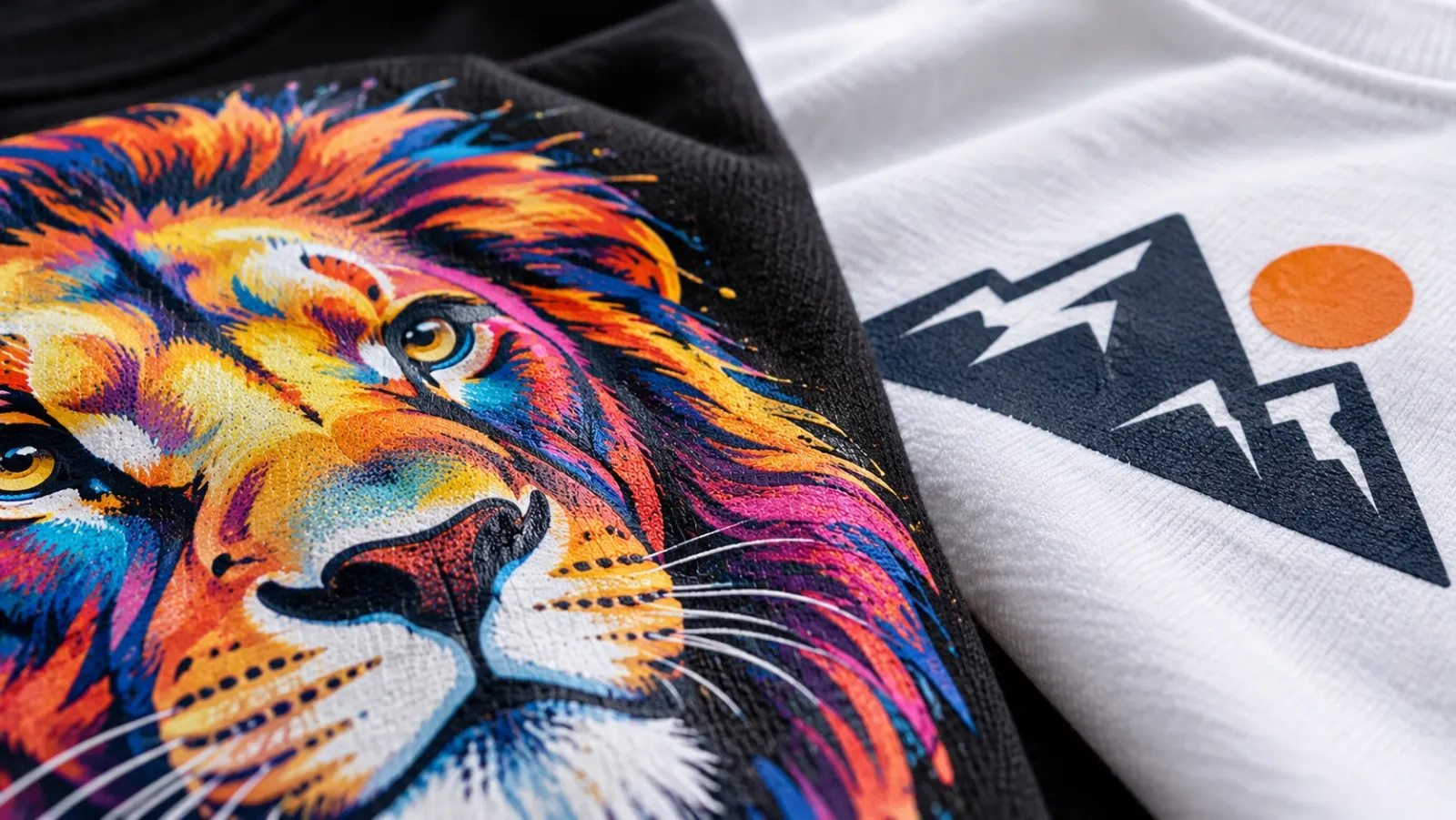
AI-generated image.
Where should the logo go?
A small left-chest logo is a popular choice for uniforms because it looks tidy and is easy to recognise at close range. A larger back print can provide better visibility when employees are working outdoors or facing away from customers.
Sleeve printing can be useful for a secondary logo or small symbol. School groups may prefer a large front design, a class illustration or a design on the back that marks a particular event.
Tip: Always check a visual mock-up using the actual garment colour. Artwork designed on a white screen background can look quite different when printed onto black, navy or brightly coloured fabric.
Caring for DTF printed clothing
The way clothing is washed and dried can affect the appearance and lifespan of its print. Care instructions depend on the transfer materials and the garment itself, so the advice provided with the finished product should always take priority over general recommendations.
Good everyday habits include:
- Turning garments inside out before washing when recommended.
- Following the temperature limits specified for both the fabric and transfer.
- Using suitable detergents and avoiding unnecessarily harsh treatments.
- Keeping direct ironing heat away from printed areas.
- Avoiding tumble-drying conditions that exceed the transfer manufacturer’s guidance.
Print durability depends on the quality of the transfer, correct heat-press application and appropriate garment care. Repeated high-temperature washing or unsuitable ironing can damage some decorations.
If you need clothing for particularly demanding conditions, explain this before ordering. It may influence the choice of fabric, garment and printing technique.
Custom printed workwear from PIXART
PIXART is a visual advertising studio based in Żychlin, Poland. It supports businesses, schools, organisations and private customers with design and promotional products, including branded clothing. The starting point is understanding how the finished garments will be used and what appearance the customer wants to achieve.
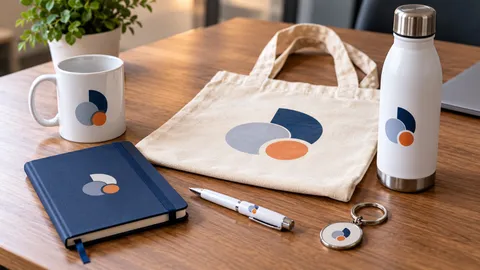
For businesses, coordinated clothing can form part of a wider brand presentation. Matching promotional products and printed advertising materials can help maintain consistent colours, logos and messaging across different customer touchpoints.
Whether you need team clothing for a construction company, matching shirts for a school event or a personalised gift, careful garment selection and well-prepared artwork are the foundations of a successful result.
Ready to discuss your design? Contact PIXART to explore garment printing options and request a quotation.
Frequently asked questions
What is DTF printing on clothing?
DTF stands for Direct to Film. The design is printed onto a special film and then transferred to the garment using adhesive, heat and pressure. It is suitable for many colourful and detailed designs.
Is DTF printing suitable for workwear?
DTF can work well on suitable T-shirts, sweatshirts and other everyday branded work garments. For certified protective clothing, the decoration must be checked against the manufacturer's requirements to ensure it does not compromise safety performance.
Can I order just one custom printed T-shirt?
DTF technology is suitable for individual designs and small production runs. The availability and conditions of a specific one-off order should be confirmed directly with PIXART.
How long does a DTF print last?
A properly produced DTF print can withstand regular use and appropriate washing. Its lifespan depends on transfer quality, application, garment material and care, so there is no universal number of washes that applies to every product.
What artwork file do I need for custom printed clothing?
High-quality artwork is important, and vector files are particularly useful for logos and simple graphics. Photographs and illustrations should have sufficient resolution for the intended print size. The printer can advise whether your existing file is suitable.