Small Business Advertising: Effective Ways to Get Noticed
Discover practical small business advertising ideas, from printed materials and branded clothing to signage and websites. Find the right approach with PIXART.
- small business advertising
- local marketing
- promotional products
- business branding
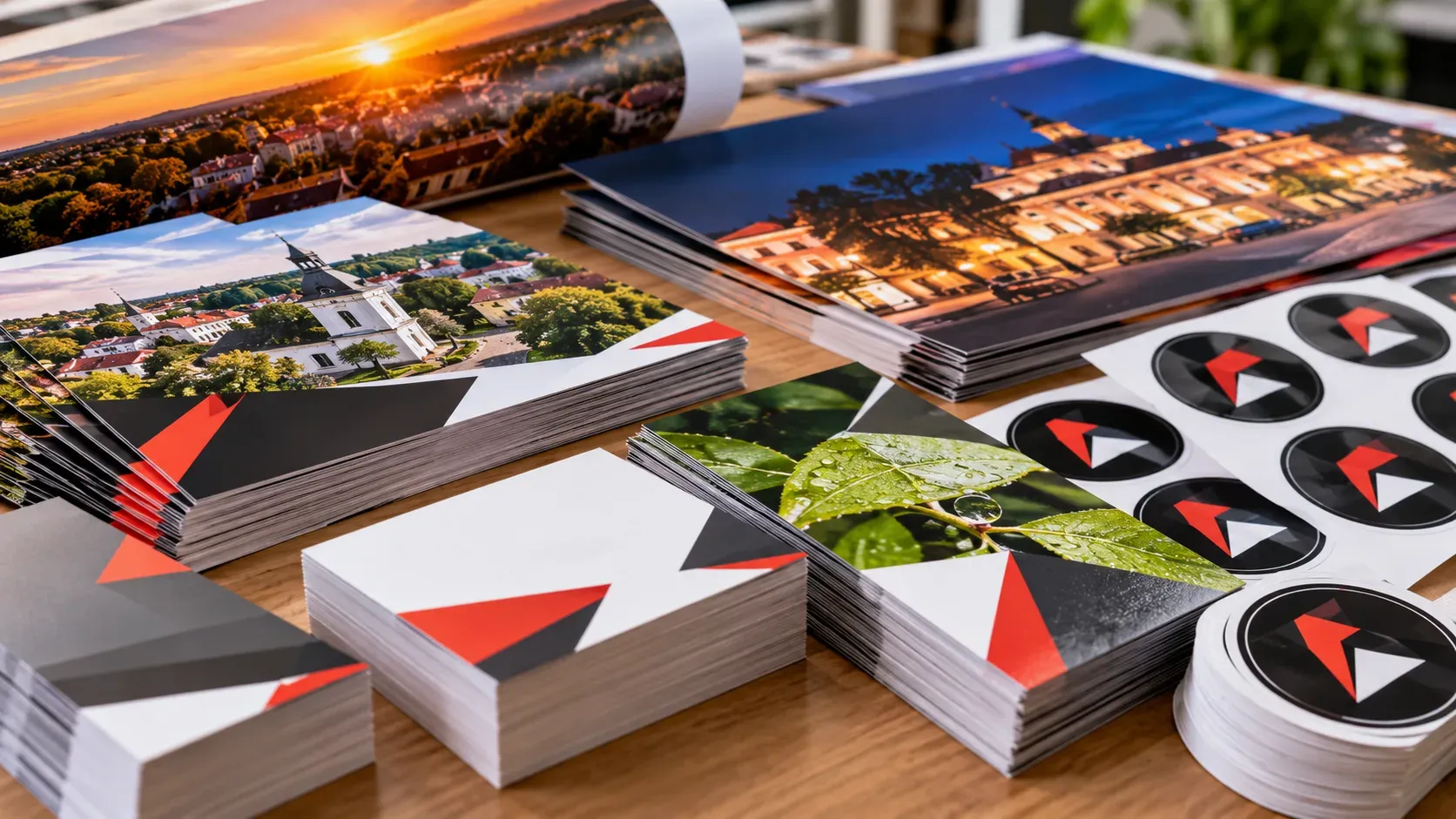
Small business advertising does not have to involve expensive campaigns or complicated marketing strategies. Whether you run a local shop, a service company or a growing business, the right promotional materials can help customers recognise your brand and understand what you offer. From business cards and printed leaflets to branded workwear and a professional website, there are practical ways to make your business more visible.
Why small business advertising matters
A good product or service is only part of building a successful business. People also need to know that your company exists, understand what makes it useful and feel confident about getting in touch.
Think about two businesses offering similar services. One has clear signage, consistent branding, professional business cards and an informative website. The other is difficult to find and provides little information. The first business makes it easier for potential customers to recognise and contact it.
Brand visibility is particularly important for businesses serving a specific town or neighbourhood. Customers may discover a company while walking past its premises, receiving a leaflet, searching online or hearing a recommendation.
Effective advertising can help you:
- introduce your company to potential customers,
- communicate your products and services clearly,
- build a recognisable visual identity,
- support local awareness,
- encourage enquiries and repeat business,
- present your company professionally.
However, successful promotion is not about putting your logo everywhere. The best approach is to choose methods that suit your audience, your goals and the resources available.
Printed advertising materials that support local businesses
Digital marketing receives plenty of attention, but printed materials still serve an important purpose. They provide something tangible that customers can take away, keep or share.
Business cards that make contact easy
A business card remains useful when meeting customers, attending networking events or visiting potential business partners. It is particularly practical for tradespeople, consultants, independent retailers and service providers.
A clear business card should include the company name, contact details and relevant online information. A QR code can direct customers to a website, booking page or portfolio.
Design matters as much as the information itself. Readable typography, suitable contrast and a consistent logo help make the card easy to use.
Leaflets, flyers and posters
Printed flyers can introduce a new service, announce an opening or promote a local event. Posters are useful when a message needs to be visible in a shop, community venue or other suitable location.
Keep the message focused. Rather than listing every service, highlight the main benefit, explain what customers should do next and provide clear contact information.
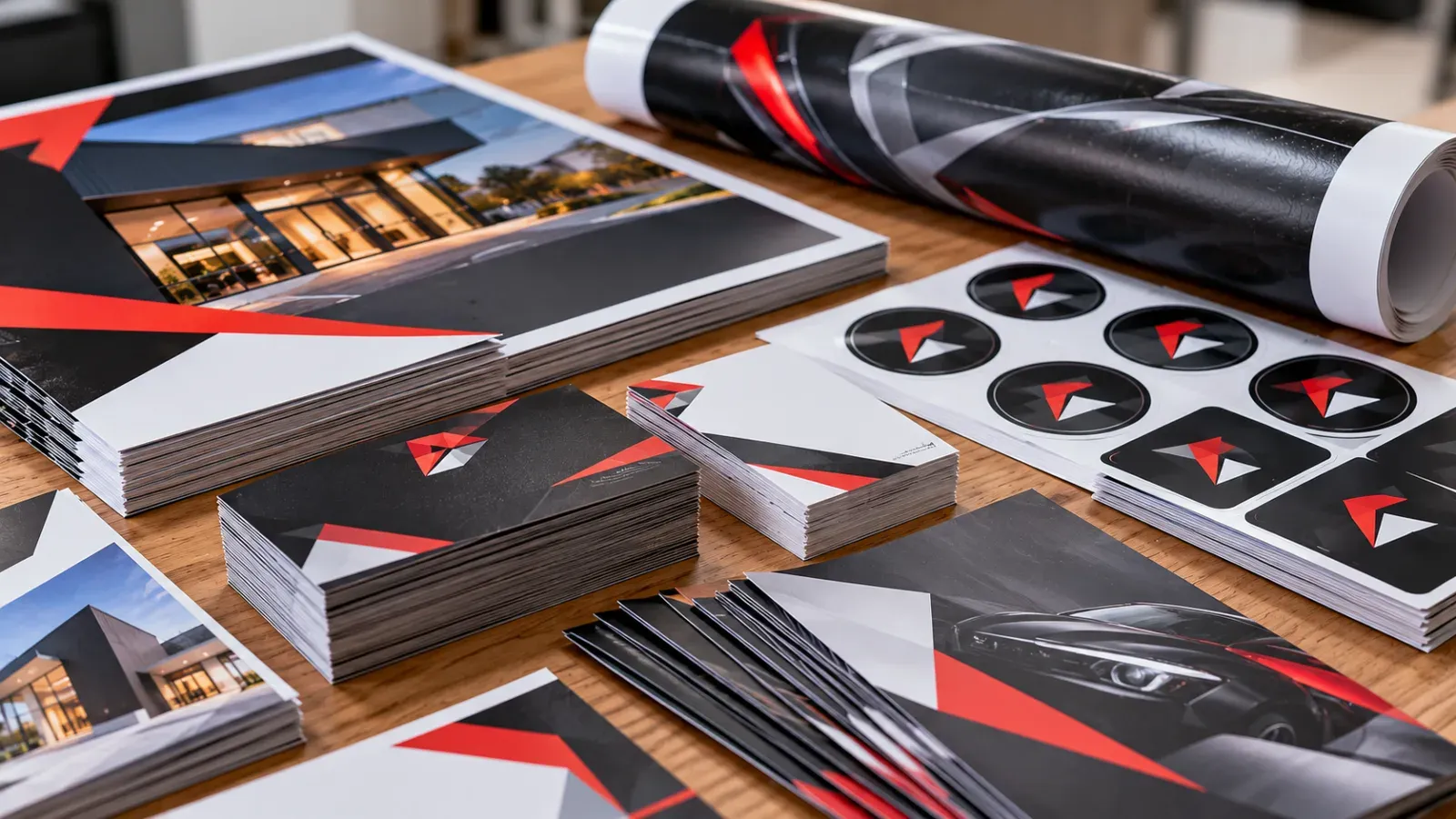
Image source: AI-generated image.
Professional advertising printing services allow businesses to choose appropriate paper, formats and finishes. Consistency across printed materials also makes the brand easier to recognise.
For a new business, a small set of well-designed materials can be more useful than a large collection of unrelated promotional items.
Branded clothing and promotional products
Not all advertising looks like a traditional advert. Clothing and everyday products can carry your branding while serving a practical purpose.
Branded workwear for a consistent team image
Branded T-shirts, polo shirts, sweatshirts and jackets can help customers identify employees. They are useful in hospitality, retail, construction, maintenance and many other customer-facing industries.
A consistent appearance can also help a small team look organised and professional. The design should remain readable without interfering with comfort or the intended use of the garment.
Different decoration methods offer different results. DTF printing is suitable for many detailed, multicolour designs, while embroidery creates a textured finish that can work particularly well for simple logos.
Before ordering, consider the fabric, how frequently the clothing will be washed and where the logo should appear.
Promotional products customers actually use
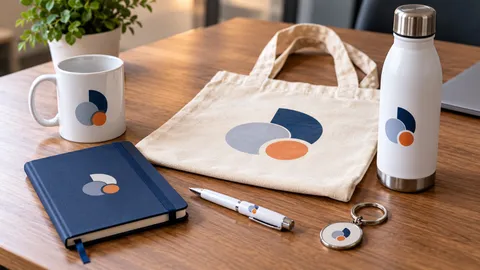
Mugs, pens, notebooks, reusable bags and keyrings are familiar promotional products. Their value depends on whether they are useful to the intended audience.
For example, a notebook may suit a training company, while reusable bags could be relevant to a local retailer. A practical item gives the recipient a reason to keep it.
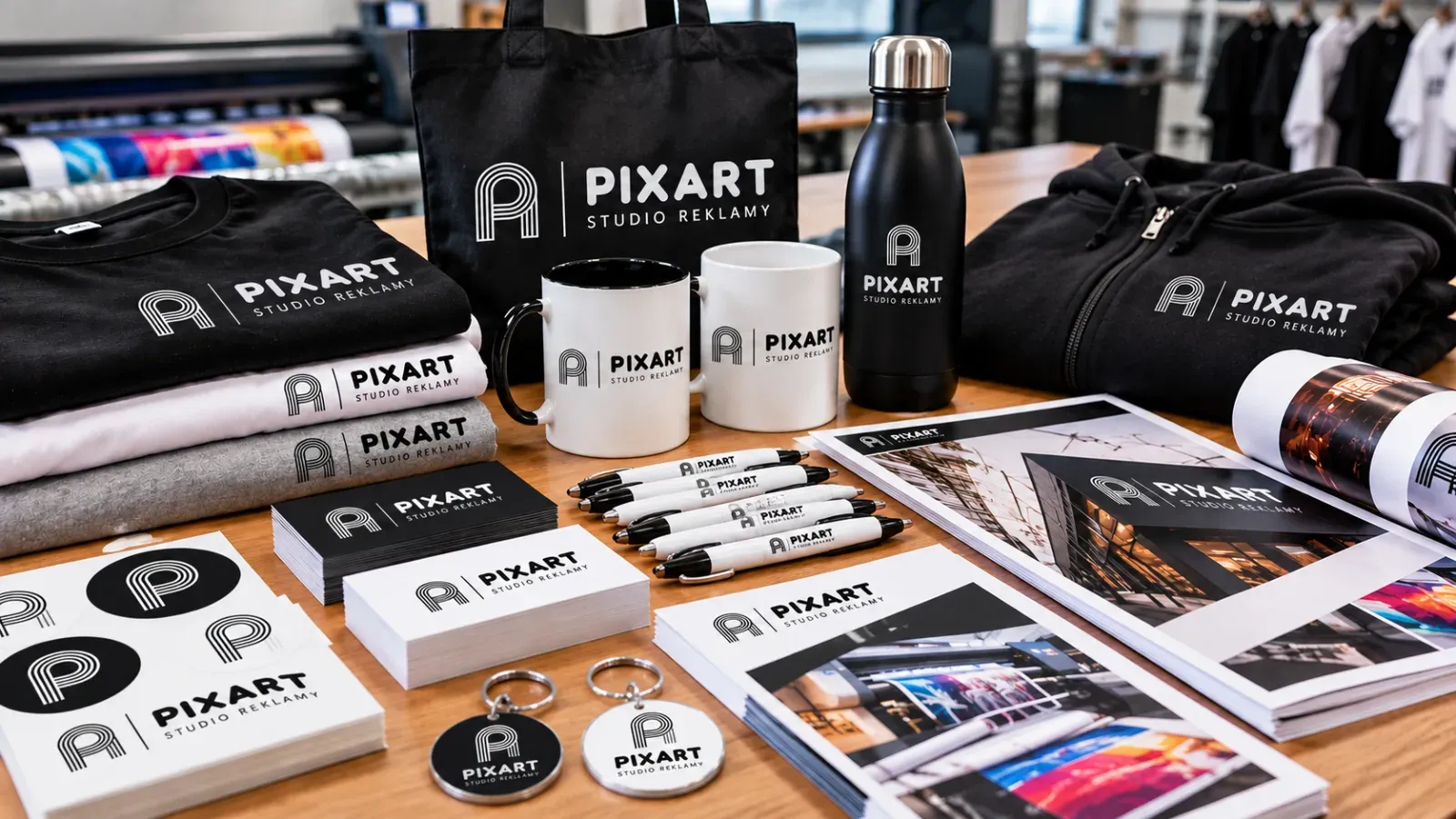
Image source: AI-generated image.
Before choosing promotional merchandise, ask:
- Who will receive the item?
- Will they find it genuinely useful?
- Is the branding clear and appropriate?
- Does the product reflect the image of the business?
Tip: A useful, well-made promotional item is often a better choice than several inexpensive products with no clear purpose.
Signage, stickers and consistent visual branding
For businesses with physical premises, signage is a key part of the customer experience. People need to recognise the location, understand what the business offers and find its entrance.
Window graphics and business signage
Window stickers, vinyl lettering, information boards and other signage can display opening hours, services, contact details and branding.
The right material depends on the surface, location and expected conditions. Graphics used outdoors may need different properties from labels applied to packaging or products.
A clear window design should be readable from a suitable distance. Avoid filling every available space with text, as this can make the message harder to understand.
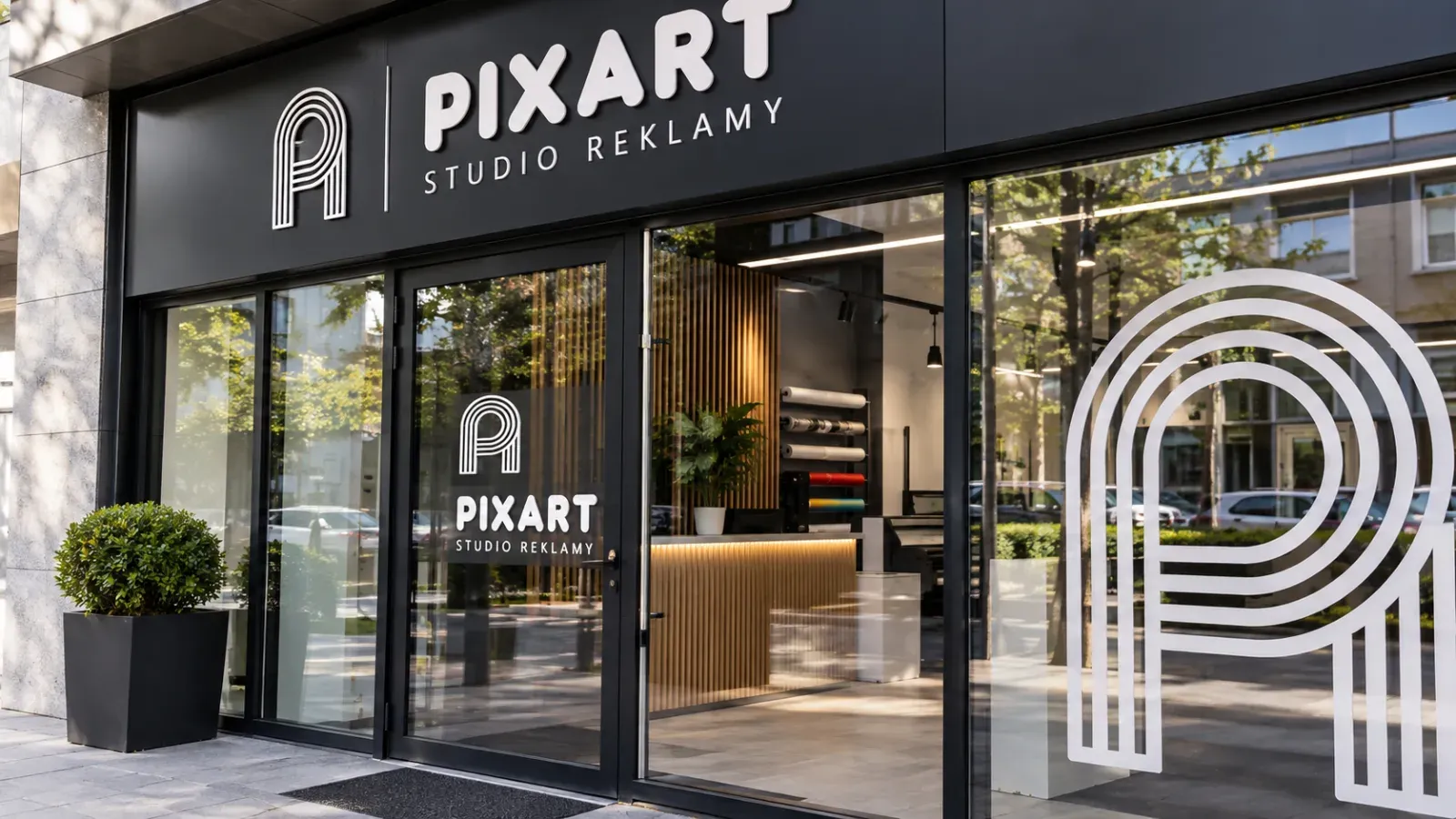
Image source: AI-generated image.
Why consistent design makes a difference
A recognisable business identity uses similar colours, typography and graphic elements across different materials. Customers should be able to connect your website, business card, workwear and signage with the same company.
Visual consistency does not mean every item must look identical. It means the elements work together and communicate a coherent brand personality.
For businesses starting from scratch, a simple brand guide can help establish basic rules for using the logo, colours and typefaces.
Local advertising and online visibility
Local businesses often serve customers within a limited geographical area. This makes location-specific promotion particularly valuable.
A business in a town such as Żychlin, Poland, may benefit from clear premises signage, local partnerships, printed materials and an accurate online presence. The same principles apply to independent businesses in towns and neighbourhoods across the UK and other English-speaking markets.
Build a stronger local presence
Practical approaches include:
- making your premises easy to identify,
- sharing business cards with relevant contacts,
- distributing printed materials where permitted,
- participating in suitable community events,
- collaborating with complementary local businesses,
- maintaining an accurate Google Business Profile,
- encouraging genuine customer feedback.
Google Business Profile helps eligible businesses manage how their information appears in Google Search and Maps. Accurate opening hours, contact details, photographs and business categories make it easier for customers to find relevant information.
Customer reviews can also help people understand the experience others have had with a company. Ask for honest feedback without offering rewards in exchange for positive ratings.
A website gives your business a reliable home online
Social media can support awareness, but a website provides a dedicated place to explain your services. Customers can explore your work, find contact information and learn what to expect before making an enquiry.
A useful small business website should have:
- a clear explanation of products or services,
- simple navigation,
- mobile-friendly pages,
- visible contact details,
- authentic photographs or examples of work,
- accurate information about the service area.
Search engine optimisation can help search engines understand your content. Clear page titles, useful information and descriptive headings are good foundations, although rankings are never guaranteed.
For companies serving a local area, mention the actual towns or regions covered rather than adding unrelated place names simply to attract traffic.
How to choose the right advertising methods
There is no universal advertising package that suits every business. A hair salon, an engineering company and a community organisation have different audiences and communication needs.
The table below offers a practical starting point.
| Advertising method | Main purpose | Suitable businesses |
|---|---|---|
| Business cards | Sharing contact details | Trades, consultants, local services |
| Flyers and posters | Promoting offers and events | Retailers, venues, service providers |
| Branded clothing | Identifying staff | Hospitality, construction, retail |
| Promotional products | Customer gifts and brand awareness | Companies, organisations, event teams |
| Window graphics | Making premises visible | Shops, salons, local offices |
| Website | Explaining services and generating enquiries | Businesses across industries |
Five steps to plan your advertising
- Define your objective. Decide whether you want more enquiries, stronger brand awareness or interest in a new service.
- Identify your audience. Consider who buys from you and how they discover local businesses.
- Choose suitable materials. Select print, signage, branded products or digital channels based on customer behaviour.
- Prepare consistent designs. Use a readable logo, clear messaging and accurate contact details.
- Review the results. Ask new customers how they found you and track enquiries where possible.
Small business advertising is often easier to manage when introduced gradually. Start with the essentials, assess their usefulness and expand only when there is a clear reason.
You can also use different materials together. A leaflet might introduce a service, while a website provides more information and a branded business card helps customers remember how to contact you.
Make your business stand out with PIXART
Effective small business advertising combines clear communication, suitable materials and consistent design. Printed products, branded clothing, promotional merchandise, signage and websites can each support a different part of the customer journey.
PIXART Studio Reklamy is based in Żychlin, Poland, and provides creative and promotional services for businesses, organisations and individual customers. Our work includes graphic design, printing, personalised products and visual advertising solutions.
Whether you need a new set of business cards, branded workwear or help creating a consistent visual identity, the starting point is understanding what your business wants to achieve.
Ready to improve your company’s visibility? Contact PIXART to discuss your project and request a quotation.
Frequently asked questions
What is the best advertising for a small business?
The best approach depends on your customers, location and goals. Local businesses may benefit from clear signage, business cards, a professional website and an accurate Google Business Profile. Start with a few relevant methods and measure the enquiries they generate.
How can I advertise my small business on a limited budget?
Focus on essentials such as clear contact information, consistent branding and an accurate online business listing. Business cards, targeted flyers and local partnerships may also be useful. Avoid spending on materials that do not match your audience.
Are promotional products effective for business advertising?
Promotional products can support brand awareness when recipients find them useful. Branded mugs, pens and bags are common examples. Choose items that suit your customers and reflect the quality of your business.
Does a local business need a website?
A website is not mandatory for every business, but it can make services, contact details and examples of work easier to find. It also provides a dedicated online destination beyond social media. Mobile usability and accurate information are particularly important.
How do I choose between flyers, signage and branded clothing?
Choose according to the purpose of your advertising. Flyers are useful for communicating offers, signage helps customers identify premises, and branded clothing makes staff recognisable. Many businesses benefit from combining two or more methods.